
Gemstones have fascinated humans for centuries with their beauty, rarity, and spiritual significance. From ancient Indian kings to modern jewelry lovers, these natural treasures have always held great value. But have you ever wondered how are precious stones formed deep inside the Earth?
The formation of gemstones is a natural process that takes millions of years. In this detailed guide, we will explore how gemstones are formed, the different geological processes involved, and also understand how are opal formed, one of the most unique gemstones found on Earth.
What Are Precious Stones?
Before understanding how precious stones are formed, it is important to know what precious stones are.
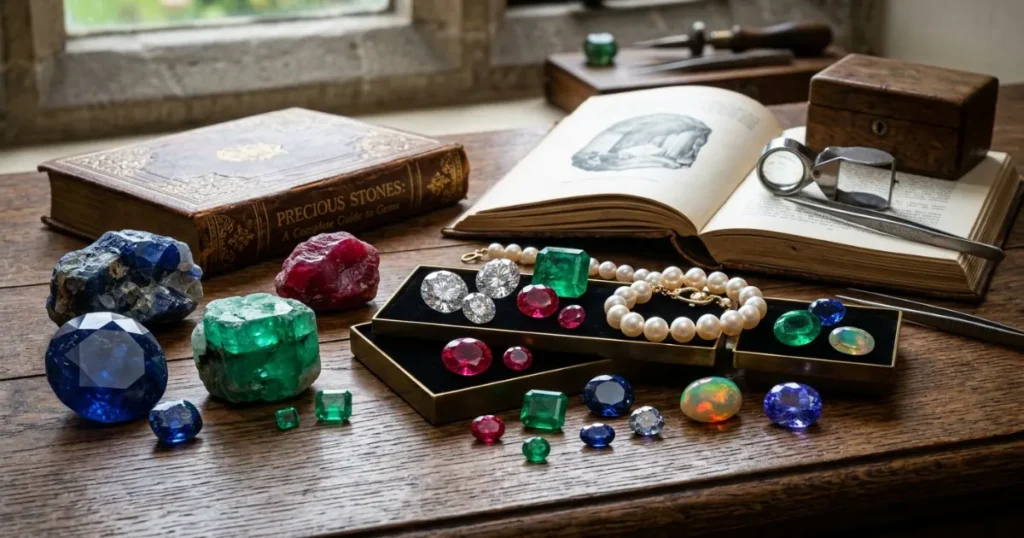
Precious stones are rare gemstones that are highly valued for their beauty, durability, and rarity. Traditionally, only four gemstones are considered precious.
- Diamond
- Ruby
- Sapphire
- Emerald
These stones are known for their exceptional hardness and brilliance, making them highly desirable in jewelry and investment.
Igneous Formation of Gemstones
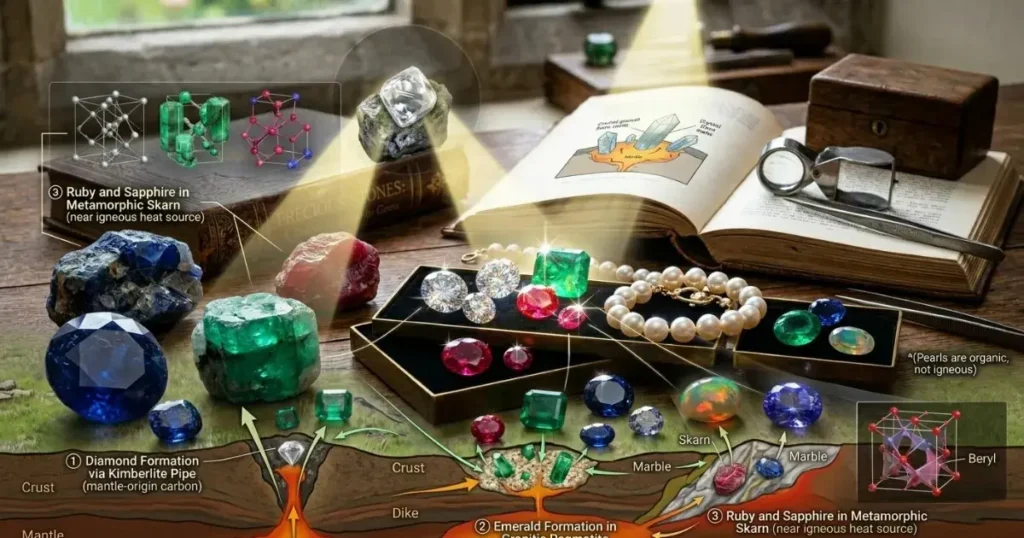
Igneous gemstones are formed from molten rock known as magma. When magma cools slowly beneath the Earth’s surface, crystals begin to form. Over time, these crystals grow large enough to become gemstones.
Diamonds are a perfect example of igneous formation. They are formed deep within the Earth’s mantle under extreme pressure and temperature. Volcanic eruptions bring these diamonds closer to the surface, where they can be mined.
In India, certain regions have geological conditions suitable for igneous gemstone formation, contributing to the country’s gemstone resources.
Sedimentary Formation of Gemstones
Sedimentary gemstones are formed on or near the Earth’s surface through processes like erosion, weathering, and deposition. Over time, small particles of minerals are carried by water and wind, eventually settling in layers.
This process helps answer the common question: how are opals formed.
Opals areformed when silica-rich water seeps into cracks and cavities in rocks. As the water evaporates, it leaves behind silica deposits that slowly harden into opal. This process can take thousands to millions of years.
India has some deposits of opal, although most high-quality opals are found in countries like Australia.

Metamorphic Formation of Gemstones
Metamorphic gemstones are formed when existing rocks are transformed by intense heat and pressure within the Earth. These conditions change the mineral structure, creating new gemstones.
Rubies and sapphires are commonly formed through metamorphic processes. These stones are often found in mountainous regions where tectonic activity has occurred.
India, especially regions like Kashmir, is famous for producing high-quality sapphires through metamorphic processes.

How Are Opal Formed?
Understanding how are opal formeis formed gives us insight into one of the most unique gemstone formation processes.
Opals are not formed under extreme hheatand pressure like diamonds. Instead, they are formed through a relatively gentle process involving water and silica.
Rainwater penetrates the ground and dissolves silica from rocks. This silica-rich water then flows into cracks and cavities. Over time, as the water evaporates, the silica is left behind, forming layers that eventually become opal.
The unique play-of-color seen in opals is caused by the arrangement of tiny silica spheres that diffract light.

Factors That Influence Gemstone Formation
Several factors play a crucial role in determining how our precious stones are formed.
Temperature is one of the most important factors. High temperatures help minerals melt and crystallize, forming gemstones. Pressure is another critical factor, especially for gemstones like diamonds that require extreme conditions.
The presence of specific minerals also determines the type of gemstone formed. For example, chromium gives ruby its red color, while iron and titanium contribute to the blue color of sapphire.
Time is perhaps the most important factor. Most gemstones take millions of years to form, making them rare and valuable.

Gestone Formation in India
India has a rich history of gemstoproduce and trade. The country is known for its gemstone cutting and polishing industry, especially in cities like Jaipur.
Different regions in India produce different types of gemstones:
- Kashmir → Sapphire
- Odisha → Diamond deposits
- Rajasthan → Various semi-precious stones
The geological diversity of India makes it an important player in the global gemstone market.

Natural vs Lab-Grown Gemstones
When discussing how our precious stones are formed, it is important to understand the difference between natural and lab-grown gemstones.
Natural gemstones are formed over millions of years through geological processes. They are rare and often more valuable.
Lab-growing stones, on the other hand, are created in controlled environments using advanced ttechnology While they have similar physical properties, they are more affordable and widely available.

Why Understanding Gemstone Formation Matters
Knowing how our precious stones formed helps buyers and collectors in several ways. It allows them to identify genuine gemstones, understand their value, and make informed purchasing decisions.
It also helps in appreciating the natural beauty and rarity of gemstones, making them even more special.

Uses of Gemstones
Gemstones are used in various ways, including jewelry, aastrology and healing practices. In India, gemstones are ofoftenorn based on astrological beliefs, which further increases their demand.
They are also used in decorative items and as investment assets.

How to Identify Natural Gemstones
To ensure authenticity, buyers should look for natural inclusions within the stone. Certification from recognized laboratories is also important. Avoid gemstones that appear too perfect, as natural stones usually have some imperfections.

Care and Maintenance of Gemstones
Proper care is essential to maintain the beauty of gemstones. They should be cleaned regularly with mild soap and water. Harsh chemicals should be avoided, and gemstones should be stored separately to prevent scratches.

Future of Gemstone Industry in India.
The gemstone industry in India is expected to grow due to increasing demand, digital transformation, and global trade opportunities. Online gemstone shopping is also contributing to market expansion.

FAQs – How Are Precious Stones Formed
1. How long does it take for gemstones to fform
Gemstones can take thousands to millions ofof years form.
2. How are opal formed differently from other gemstones?
Opals are formed from silica-rich water deposits rather than heat and pressure.
3. Are all precious stones formed underground?
Most are formed uunderground but some like opals form near the surface.